Loading...
Serving Grand Forks, ND and surrounding areas. (701) 402-4816
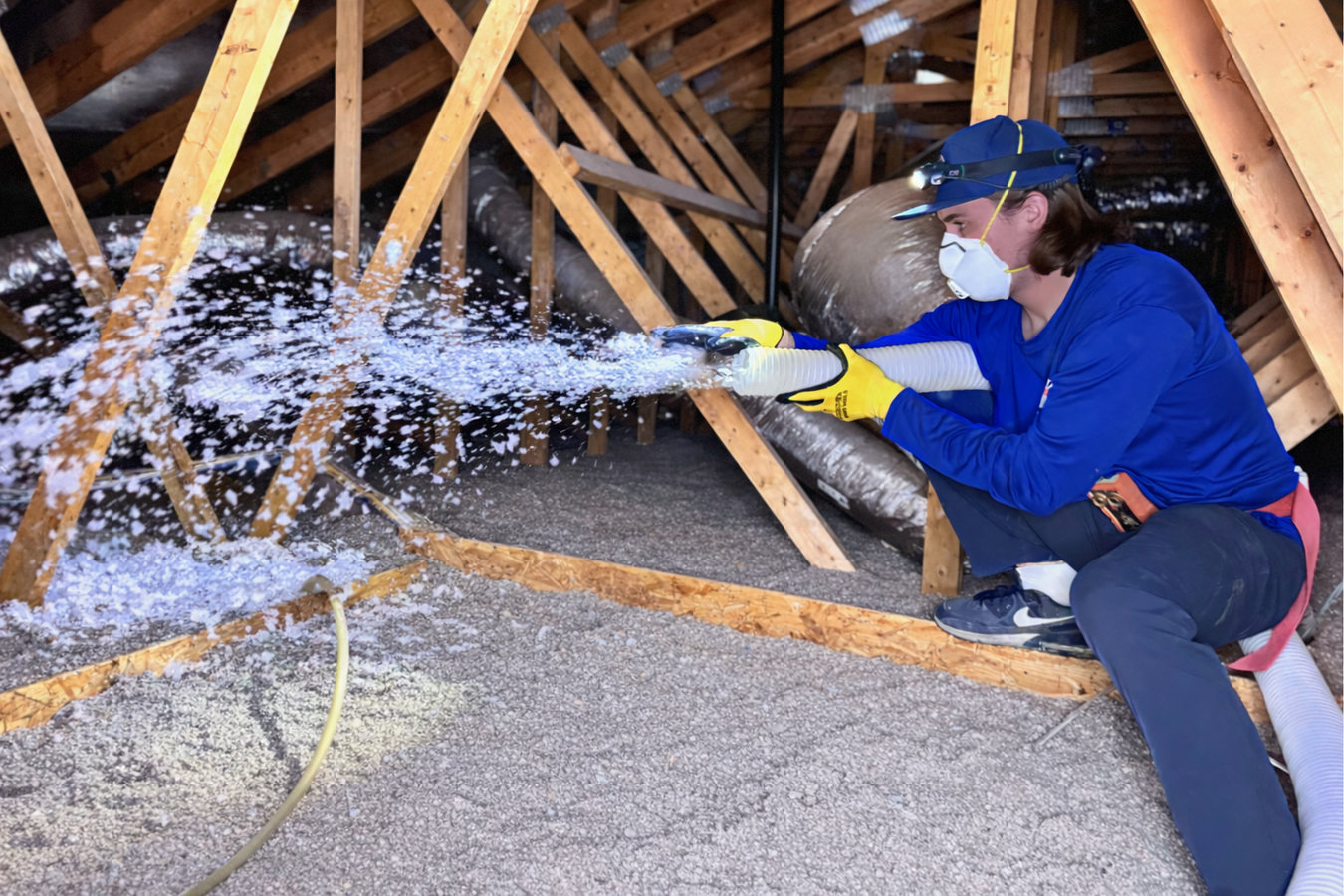
Heat rises straight through an under-insulated attic. Ice dams follow. So do high heating bills. Proper attic insulation keeps the warmth where you need it and protects your roof from the inside out.
Attic insulation in Grand Forks is one of the most effective investments a homeowner can make - most jobs are completed in a single day, and the comfort difference shows up within the first heating cycle. Grand Forks sits in one of the coldest climate zones in the country, and federal energy guidelines call for significantly more attic insulation here than what was standard when most of the city's older homes were built. If your attic falls short of that level, your furnace is making up the difference every single month from October through April.
The most common problems we see in Grand Forks attics are thin or compressed older insulation, gaps around light fixtures and pipes that were never sealed, and no coverage at all over the attic hatch. Together, those gaps are why your upstairs rooms feel cold, your heating bill climbs every year, and ice dams form along your roofline each winter. Many of our attic jobs pair insulation with our attic air sealing service - sealing gaps first means the insulation on top actually performs at its rated value.
The U.S. EPA estimates that properly sealing and insulating a home can save up to 15% on total energy costs. In Grand Forks, where natural gas heating runs for nearly half the year, that translates to meaningful savings each season.
If your gas or electric bill has risen over the past few winters without any change in habits, your attic insulation may be the culprit. Heat rises, and if it is escaping through your attic, your furnace runs longer to compensate. In Grand Forks, where heating season runs from October through April, even a modest improvement makes a noticeable difference.
Thick ridges of ice forming along your roofline or icicles at your eaves are a clear sign that heat is escaping through your attic. This is a well-known problem in Grand Forks, and it almost always points to insufficient attic insulation. Left unaddressed, ice dams push water under shingles and into your ceiling.
If the bedrooms on your top floor are always colder than the rest of the house, or if you feel a chill near the ceiling even with the heat running, your attic insulation is not doing its job. This is especially common in older Grand Forks homes where insulation has settled over the years.
If you peek into your attic and can clearly see the wooden beams running across the floor, your insulation is too thin. A properly insulated attic in this climate should have insulation deep enough that the joists are completely buried. If you can see them, you are losing heat every day of the heating season.
Every attic insulation job starts with an honest look at what is already there. We measure current depth, check for moisture or damage, and identify gaps that need to be sealed before any new material goes in. For most Grand Forks attics, we recommend blown-in insulation because it fills irregular spaces - around pipes, wires, and old framing - more completely than pre-cut batts. Blown-in also works directly on top of existing insulation in most cases, so there is no need to remove what is already there unless it is wet, moldy, or contains older materials that should not stay.
For attics with significant air leakage, we pair the insulation upgrade with our attic air sealing service - sealing the gaps first so the insulation on top performs at its full rated value. For homeowners considering blown-in insulation for other parts of the home, we can often bundle wall and attic work into a single project visit.
Best for most Grand Forks attics - fills irregular spaces completely and can be added on top of existing material in most cases.
A practical option when the attic has clear, uniform framing and plenty of headroom to work in.
Closes gaps around fixtures, pipes, and framing before new insulation goes in - a step that is often skipped but should not be.
For homeowners who want to know where they stand before committing to a project - we measure and give you a straight answer.
Grand Forks has a large share of homes built before 1980 - many dating back to the 1940s and 1950s - that were insulated to the standards of their era. Those standards fall well short of what is recommended for a climate where January lows regularly hit -10 degrees F and the heating season stretches six months. If your home was rebuilt after the 1997 Red River flood, it may have been updated to late-1990s codes, which are better but still below current recommendations for this zone. Either way, the attic is almost always the first place to look when a home is losing heat faster than it should.
Spring snowmelt adds another layer of risk. Wet soil and rising moisture levels in spring put pressure on attic ventilation - if insulation covers the vents or the attic is sealed without proper airflow, condensation can build up on roof sheathing over time. We check ventilation as part of every attic assessment. We serve homeowners throughout Grand Forks, ND and surrounding areas like Wahpeton, ND, where older housing stock and a similar cold climate create the same attic insulation challenges.
We ask a few basic questions - the age of your home, whether you have had any insulation work done, and what is prompting the call. We respond within 1 business day to schedule a free visit.
We go up into your attic, measure what is there, check for moisture or damage, and note any gaps around fixtures and pipes. You get a written estimate before any work is scheduled - no pressure to book.
On the day of the job, we seal gaps and openings in the attic floor first. Then we install the insulation to the agreed depth. This air sealing step is what separates a lasting job from one that just looks done.
When the work is done, we walk you through the results and confirm the insulation depth. Most projects are complete in a single day. There is no curing time - your home is fully usable as soon as the crew leaves.
We respond within 1 business day. There is no obligation after the estimate. Once you submit, someone from our office will call to schedule a free on-site attic assessment at a time that works for you.
(701) 402-4816Our crews insulate homes across this region all year and know how Grand Forks attics are built. We measure what is there, explain what your attic needs, and coordinate any permits the job requires before we start.
Skipping air sealing before adding insulation is the most common shortcut in the industry. We include it as a standard part of every attic job, because insulation on top of unsealed gaps does not perform at its rated value. It is the step that separates a lasting result from one that looks done but is not.
We measure your attic, tell you what it currently has and what it needs, and give you a written estimate you can take away and compare at your own pace. No pressure to commit, no follow-up sales calls.
Qualifying attic insulation upgrades may be eligible for a federal energy efficiency tax credit. We provide the product documentation and receipts you need to claim it - so you have everything ready when you file.
Attic insulation is not a flashy upgrade - you will not see it every day. But in Grand Forks, you will feel it every time the temperature drops below zero, and you will see it on your heating bill each month from October through April. Call us at (701) 402-4816 or submit an estimate request online.
For information on insulation standards, see the U.S. Department of Energy insulation guide.
The most common method for attic upgrades in Grand Forks - fills every corner of an irregular attic space more completely than batts.
Learn moreClosing the gaps around fixtures, pipes, and framing before insulation goes in - the step that makes insulation actually perform at its rated value.
Learn moreEvery month your attic is under-insulated, your furnace runs harder than it needs to. The sooner we assess it, the sooner that changes.