Loading...
Serving Grand Forks, ND and surrounding areas. (701) 402-4816
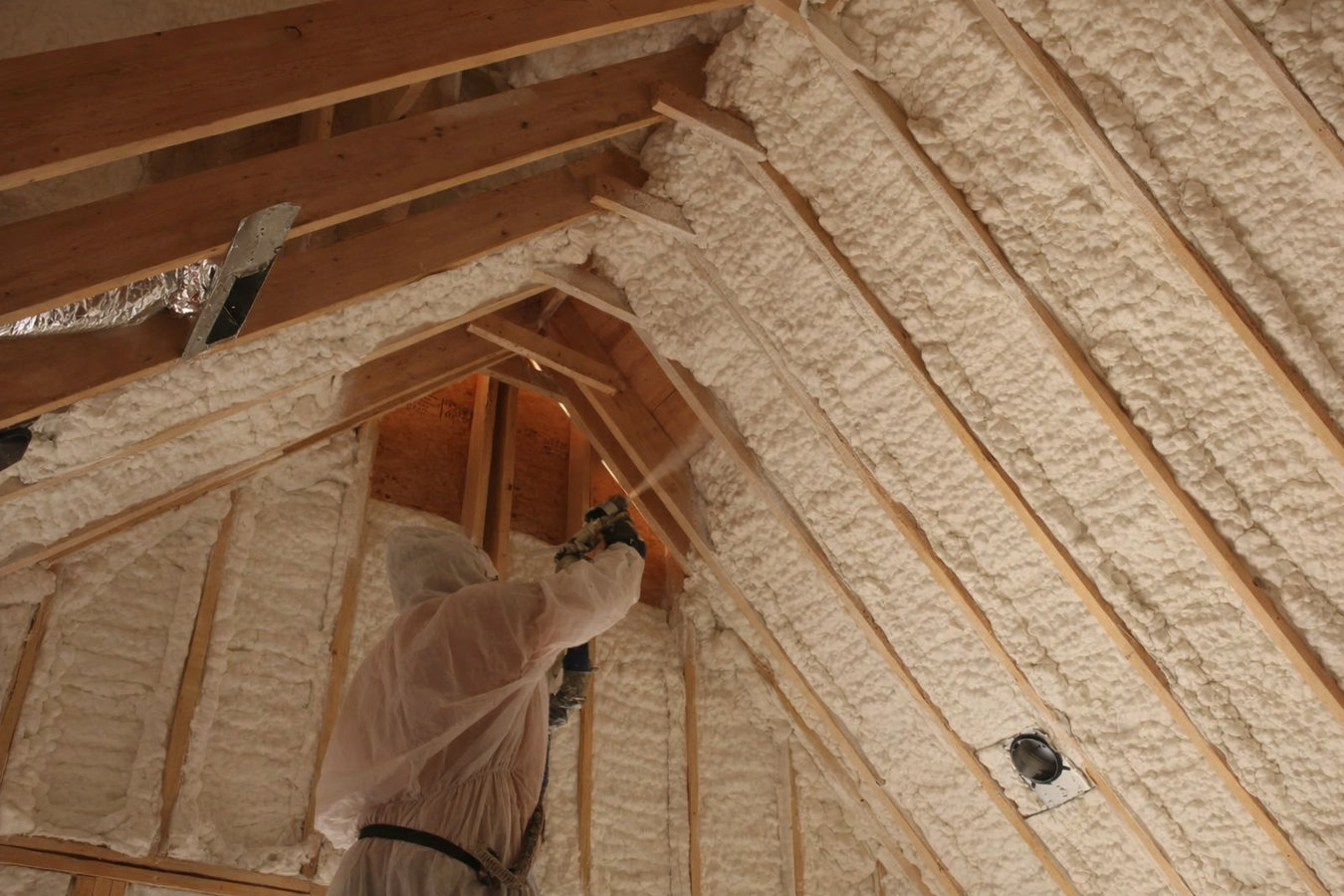
Older Grand Forks homes lose heat through dozens of hidden gaps. Open-cell foam fills every crack, stops ice dams, and keeps your furnace from running all winter.
Open-cell foam insulation in Grand Forks is sprayed as a liquid directly into walls, attics, and rim joists, where it expands to fill every gap and cures into a lightweight, airtight barrier - most residential jobs take one to two days. It is a strong fit for the older housing stock in this area, where decades of settling have opened up cracks that fiberglass batts simply cannot reach.
If your home was built before the 1990s and has never had insulation work done, there is a good chance warm air has been escaping through the attic floor, around electrical boxes, and along the tops of interior walls every single winter. Open-cell foam seals all of it in one pass. It is also one of the best solutions for attic air sealing because it conforms to irregular framing shapes that rigid boards cannot match.
One important distinction for Grand Forks homeowners: open-cell foam absorbs moisture rather than repelling it. That makes it the right choice for above-grade spaces - attics, walls, ceilings - but the wrong choice for basement rim joists or crawl space walls, where ground moisture is a real concern. We will always tell you which product belongs where before any work begins.
If your gas or electric bill has been creeping up year over year but your habits have not changed, your home is losing heat faster than it should. In Grand Forks, where heating season runs October through April, even a modest gap in coverage adds up to real money every month. Bills that feel out of proportion to your home size are worth investigating.
Stand near an exterior wall on a cold January day. If it feels noticeably cold to the touch, or if you can feel a draft near the baseboard or ceiling, your insulation is not performing. This is especially common in older Grand Forks homes where the original insulation has settled or was never adequate for the climate.
Thick ridges of ice building up along your roof edge - or water stains appearing on the ceiling after a thaw - are clear signs your attic is losing heat through gaps in the floor. Ice dams are a documented problem in Grand Forks and they do not go away on their own. They come back every winter until the underlying heat loss is fixed.
If your home was built before the 1990s and has no record of insulation upgrades, the original coverage has likely settled, degraded, or was never sufficient for a Zone 7 climate. Older homes in neighborhoods like Lincoln Park and the Near Southside were built before modern standards existed - and those gaps have been quietly leaking heat for decades.
We install open-cell foam in attics, wall cavities, and above-grade rim joists for both existing homes and new construction in Grand Forks and across the region. For whole-home projects, we start with the attic floor - sealing every pipe, wire chase, light fixture, and wall top-plate before the foam goes in. This air-sealing-first approach is the reason foam outperforms other insulation types in a climate this cold. If you are also considering spray foam insulation more broadly, we can walk you through where open-cell versus closed-cell makes sense for each area of your home.
For below-grade spaces - basement rim joists, crawl space walls, and foundation areas - we recommend attic air sealing paired with closed-cell foam in the moisture-exposed zones. We scope each project individually so the right product ends up in the right place. Every estimate includes material type, coverage area, and finished depth so you know exactly what you are buying before we schedule anything.
Best suited for homes with unfinished attic space where ice dams, high heating bills, or uneven room temperatures are the primary concern.
Best suited for homes with finished walls where cold exterior surfaces or drafts persist despite other improvements.
Best suited for homes converting an attic to conditioned space, where insulating the roof slope rather than the floor is the right approach.
Best suited for older homes getting a full envelope upgrade, where sealing and insulating in one project maximizes comfort gains and minimizes disruption.
Grand Forks sits in one of the coldest climate zones in the continental United States. Average January lows hover around -10 degrees Fahrenheit, and wind chills push well below that. At those temperatures, even a small gap in your attic floor or wall assembly lets in a shocking amount of cold air - and your furnace has to work overtime to compensate. The freeze-thaw cycle in the Red River Valley also gradually opens up gaps in wood framing over time, which is why older homes in this region tend to get leakier with each passing decade rather than staying the same. Open-cell foam seals those gaps permanently rather than patching them season by season. Homeowners in East Grand Forks face the same climate conditions, and we serve that community as well.
The post-1997 flood rebuilds added another layer of complexity to the local housing stock. Homes rebuilt in the late 1990s were constructed to the codes of that era, which are more energy-conscious than pre-1980 construction but still fall short of what today would recommend for a Zone 7 climate. Meanwhile, many of the surviving older homes nearby were never updated. The result is a city where two houses on the same block can have very different insulation needs. We work regularly in both Fargo and across the Grand Forks metro, so our crews understand the range of construction types they are likely to find in any given neighborhood.
When you reach out, we ask about your home age, the areas you want insulated, and any specific problems you have noticed. We reply within one business day to set up an in-home visit - no pricing happens over the phone.
We walk through your attic, walls, and any other areas to measure coverage and check for moisture, damaged framing, or old insulation that should come out first. You receive a written estimate specifying material, depth, and coverage area before any work is scheduled.
Clear a path to the work areas and move stored items out of the attic or crawl space. Plan to be out of the home - along with pets - for at least 24 hours after the foam is sprayed while it cures and the space ventilates.
We walk through the finished work with you so you can see the coverage yourself. If a building permit was required, we handle the coordination with the City of Grand Forks Building Inspection Division - you do not need to manage any paperwork.
Free written estimate. No pressure. We reply within one business day.
(701) 402-4816We work regularly in communities throughout the Red River Valley on both sides of the state line. That volume means we stock materials and can schedule efficiently - you are not waiting weeks for a crew that rarely works in this climate.
Every estimate specifies the foam type, finished coverage depth at multiple measurement points, and the total square footage. You know exactly what you are buying before you agree to anything - no surprises when the crew arrives.
We use open-cell foam where it performs best - above-grade walls, attics, roof decks - and recommend closed-cell for moisture-exposed zones. Getting this distinction wrong wastes money and can cause moisture problems. We explain the reasoning on every project.
The City of Grand Forks requires permits for insulation work that affects your thermal envelope. We pull the permit, coordinate the inspection, and give you the documentation you need. The Spray Polyurethane Foam Alliance maintains industry installation standards our crews follow on every job.
What ties all of this together is a straightforward approach: you should know what the job involves before it starts, and you should be able to see the results when it is done. That is how we work on every open-cell foam project in Grand Forks.
Pair open-cell foam with thorough attic air sealing to eliminate the hidden gaps that drive ice dams and high heating bills in Grand Forks winters.
Learn moreExplore the full range of spray foam options - including where closed-cell foam is the right choice for moisture-exposed areas in your home.
Learn moreGrand Forks heating season starts in October - book now and head into winter with a tighter, warmer home and lower bills.