Loading...
Serving Grand Forks, ND and surrounding areas. (701) 402-4816
If your home stays cold no matter what your thermostat says, gaps in your insulation are likely to blame. Blown-in insulation fills every corner and odd-shaped space that batts and boards miss - delivering even, consistent coverage that keeps heat in all winter.
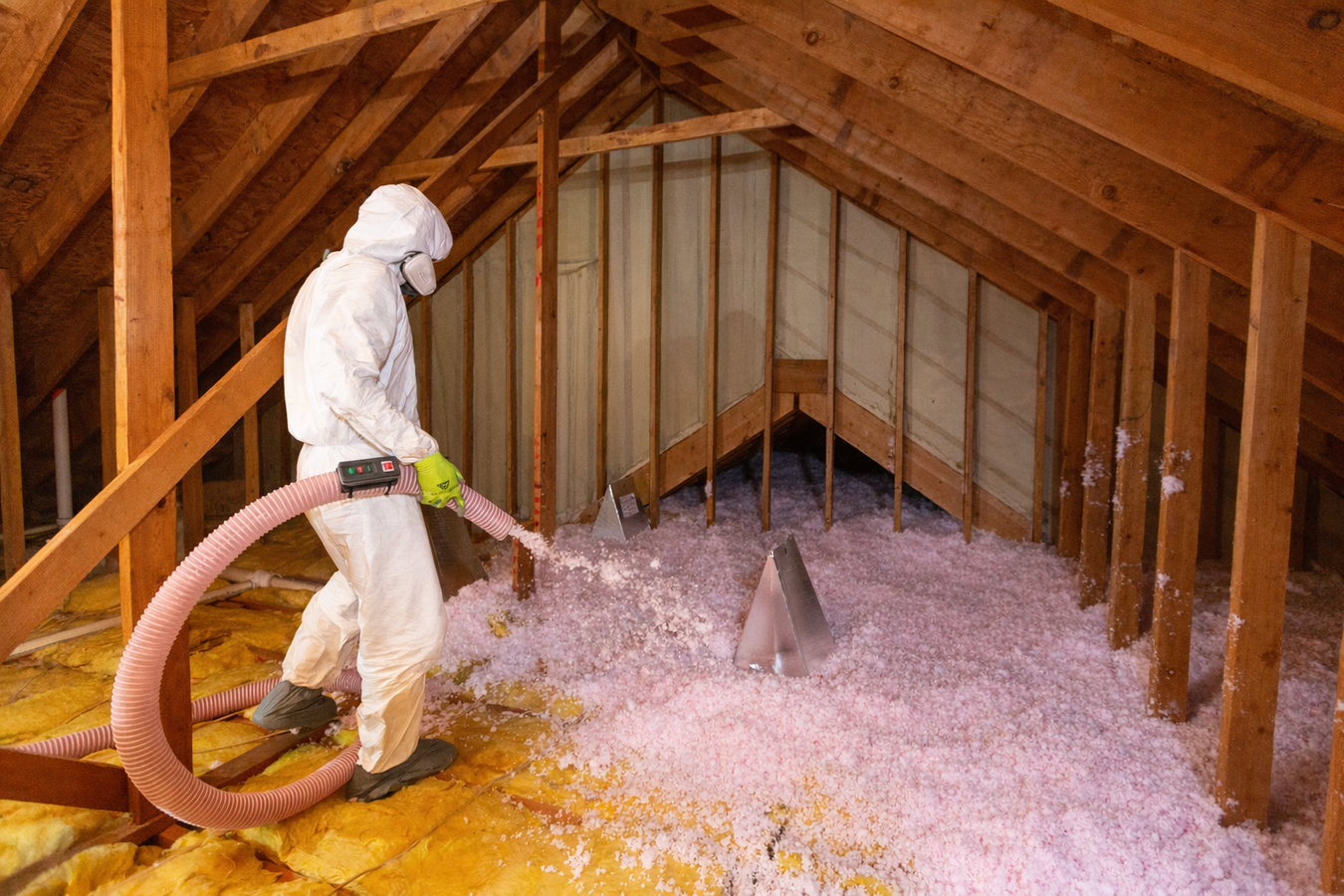
Blown-in insulation in Grand Forks fills your attic floor, wall cavities, and hard-to-reach corners with loose fiberglass or cellulose insulation - most attic jobs for a typical single-family home are completed in two to four hours. Unlike rigid boards or batt rolls, blown-in material conforms to every joist, rafter, and irregular framing gap, leaving no thin spots where cold air can push through.
In a climate like Grand Forks, where January temperatures regularly drop to single digits, even small gaps in your attic coverage translate directly into higher heating bills and cold rooms. If you have already noticed ice building up along your roofline in winter, inadequate attic insulation is usually part of the cause - and blown-in coverage is one of the most cost-effective ways to address it.
Blown-in insulation pairs well with whole-home insulation work when you want to address multiple areas in a single project. For exterior walls specifically, our wall insulation service uses the same blown-in process through small drilled access points.
If your gas or electric bill has climbed over the past few winters without any change in your habits, heat is likely escaping through your ceiling. An under-insulated attic is one of the biggest contributors to energy loss in homes built before the 1990s. Grand Forks heating seasons are long - every month you delay costs you money.
Thick ridges of ice building up at your eaves every January or February are a textbook sign that warm air is escaping through your attic and melting roof snow, which then refreezes at the cold edges. Left alone, those dams can force water under your shingles and cause interior damage. The root cause is almost always insufficient attic insulation.
If the upstairs bedroom always feels drafty no matter how high you run the furnace, uneven insulation coverage is likely the culprit. Blown-in material can settle or shift over years, leaving thin spots that give cold air a path in. A single cold room on the top floor is often the first symptom homeowners notice.
If you can peek into your attic and see the wooden joists across the floor through the insulation, you are well below where you need to be for a North Dakota winter. A properly insulated attic in this climate should have a thick, even layer that covers the joists completely. If the wood is visible, the insulation is not doing its job.
Grand Forks Insulation installs blown-in fiberglass and cellulose insulation in attics, wall cavities, and enclosed spaces throughout the region. Attic blown-in is the most common project - we add material to your existing attic floor until coverage meets the level recommended for this climate zone, which is one of the most demanding in the continental United States. We seal gaps around light fixtures, plumbing penetrations, and attic hatches before blowing in the material, because skipping that step leaves the insulation less effective than it should be.
For existing walls, we drill small access holes in the exterior or interior, fill each stud bay completely, and patch the holes so the repair is clean. This retrofit wall approach works well for older Grand Forks homes that were built with little or no wall cavity insulation. If your project involves replacing old or water-damaged material, we coordinate blown-in installation as part of a larger home insulation scope. For homes where wall air infiltration is the primary concern, our wall insulation service addresses both filling cavities and sealing bypasses at the same time.
Best suited for homes with accessible attic space that need to meet current recommended coverage levels for cold climates.
Ideal for older homes with uninsulated or under-insulated wall cavities where exterior or interior access is possible.
Suited to homeowners who want to understand material differences and choose the option that fits their budget and moisture conditions.
Grand Forks sits in one of the coldest climate zones in the continental United States, with average January lows around -10 degrees F and a heating season that runs from October through April. Homes here need roughly twice the insulation depth that is recommended for homes in the South. A large share of the city housing stock was built in the mid-20th century, when insulation standards were far less demanding - which means many Grand Forks homes are significantly under-insulated by today's benchmarks. The flat terrain around the city also means wind-driven cold air finds every gap in your building envelope, making complete coverage especially important.
We serve homeowners across the region, including communities in Fargo, ND and Moorhead, MN, where the same cold climate and older housing stock create similar insulation challenges. If you have not had your attic coverage checked in the past decade, a quick assessment from one of our crew members will tell you exactly where you stand.
We respond within 1 business day. During your first contact we ask a few basic questions - home age, whether you have had insulation work before, and what is prompting your call. No pressure, no commitment required at this stage.
We visit your home, go up into the attic, measure existing depth at multiple points, and check for air leaks around fixtures and pipes. This takes about 20 to 30 minutes. You receive a written quote that specifies material type, coverage depth, and total cost.
Our crew sets up a blowing machine in your driveway connected to a hose running into the attic. We seal gaps first, then blow material to the agreed-upon depth. You can stay home throughout - the main inconvenience is the sound of the machine outside.
We measure finished depth at several points across the attic before leaving. We show you the numbers. If you are filing for a utility rebate through Xcel Energy, we provide the documentation you need before the crew packs up.
We respond within 1 business day - no obligation, no pressure. Once you submit, someone from our office will call to schedule a free on-site assessment at a time that works for you. We will measure your current coverage, explain your options, and give you a written quote before any work begins.
(701) 402-4816We cover a wide service territory spanning both states, which means our crews work in homes like yours regularly - not occasionally. Regional volume means we stock materials and schedule efficiently without long waits.
Every quote we provide specifies the material type, the finished depth at multiple measurement points, and the total coverage area. You know exactly what you are buying before you agree to anything.
We seal gaps around fixtures, pipes, and the attic hatch with foam or caulk before the insulation goes in. Skipping this step is the most common shortcut in the industry - and it leaves your insulation performing below its potential.
Grand Forks homeowners served by Xcel Energy may qualify for insulation rebates. We provide the documentation you need - material type, depth measurements, coverage area - before we leave the job site. The U.S. Department of Energy also maintains guidance on available federal tax credits.
Each of these points comes down to the same thing: you should know what you are getting, and the work should be done to a standard you can verify. That is what we aim to deliver on every blown-in insulation project in Grand Forks.
A full-home insulation assessment and upgrade that covers attic, walls, basement, and crawl space together.
Learn moreFilling existing wall cavities with blown-in material to stop cold-air infiltration through exterior walls.
Learn moreGrand Forks winters start early - call now and have your attic covered before the first hard freeze.