Loading...
Serving Grand Forks, ND and surrounding areas. (701) 402-4816
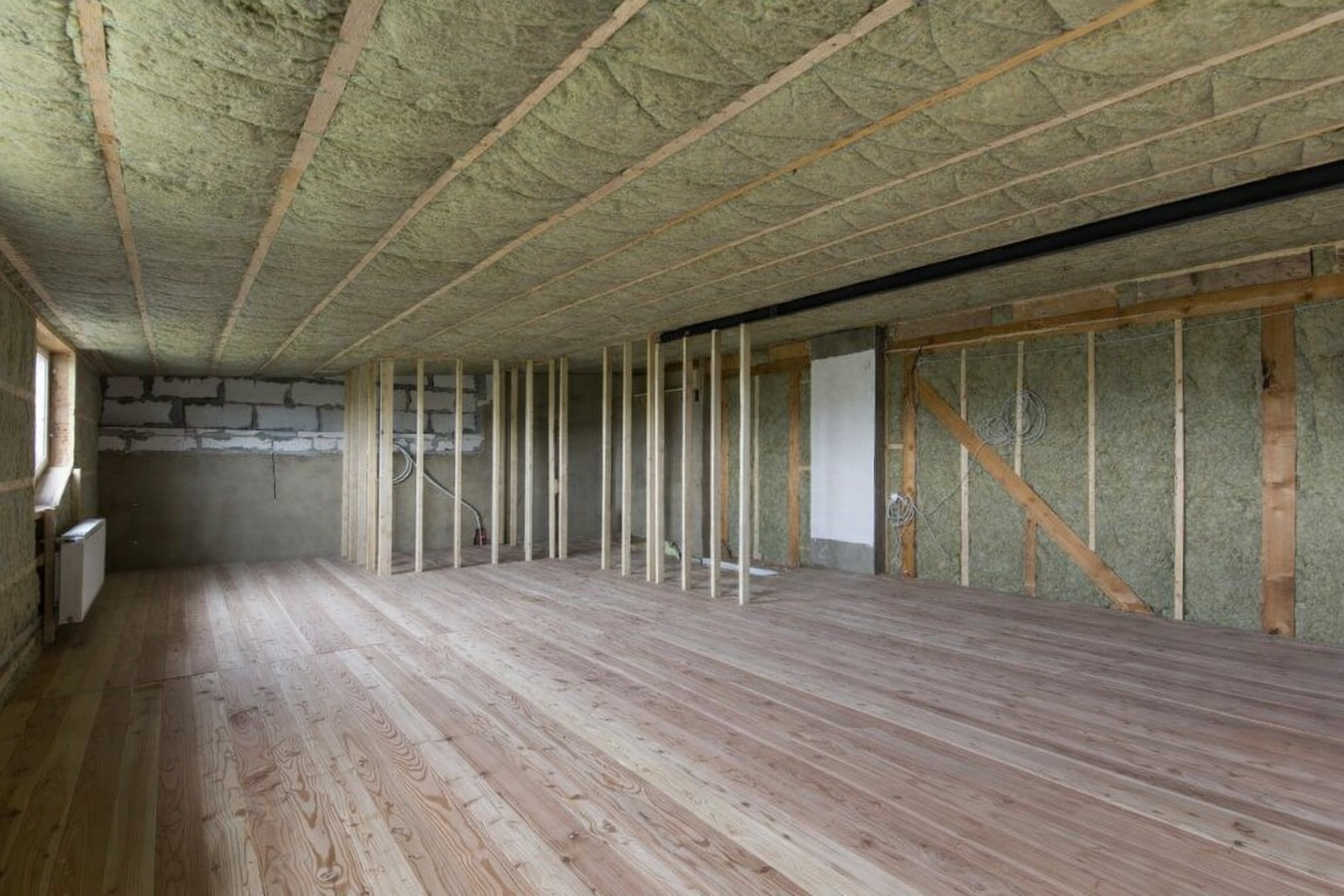
An uninsulated basement bleeds heat all winter and leaves your floors cold, your pipes at risk, and your furnace working overtime. We insulate Grand Forks basements the right way - moisture check first, then a tight installation built for Zone 7 cold.
Basement insulation in Grand Forks creates a barrier between your living space and the frozen ground pressing against your foundation walls - most projects are completed in a single day. When those walls are bare concrete or block with nothing on them, the cold from soil that freezes three to four feet deep transfers right through into your home. That cold drags down the floors above, forces your furnace to run longer, and puts your pipes at risk every time the temperature drops below zero.
Grand Forks has a large share of homes built before 1985, when insulation standards were far lower than they are today. Many of those basements have bare walls, original batts that have sagged and compressed over the decades, or insulation that was damaged by moisture and never replaced. If your home falls in that category, the basement is likely one of the biggest sources of heat loss you are paying for every month from October through April.
Basement insulation works best when paired with air sealing at the rim joist - the framing that sits right on top of your foundation wall. Our closed-cell foam insulation service handles that detail particularly well, and for homes with a partial crawl space alongside the basement, we also offer crawl space insulation to cover the full lower level.
Walking across your kitchen or living room floor on a January morning and feeling genuine cold underfoot is one of the most common complaints from Grand Forks homeowners with older homes. Heat is escaping through the basement ceiling below those rooms, and no amount of thermostat adjustment will fix it. Insulating the basement ceiling or walls changes that noticeably - usually within the first cold stretch after installation.
If your gas or electric bill keeps rising even though your thermostat habits have not changed, an uninsulated or under-insulated basement is a likely reason. In Grand Forks, where furnaces run hard from October through April, the heat escaping through bare foundation walls and uninsulated rim joists accounts for a meaningful share of what you pay every month to stay warm.
Grand Forks winters are severe enough that pipes running through an uninsulated basement are genuinely at risk. If you have had a pipe freeze - or if you run a trickle of water on the coldest nights just to be safe - that is a direct sign your basement is not retaining enough heat to protect your plumbing. A properly insulated basement keeps that ambient temperature stable enough that the trickle-water habit becomes unnecessary.
White chalky residue on your concrete walls - called efflorescence - is a sign that water has been moving through the wall. Damp patches after snowmelt or heavy rain are also warning signs. These moisture issues need to be addressed before insulation goes in - but catching them now means you can get ahead of the problem before it becomes mold. A Grand Forks contractor who skips the moisture check before installing is cutting a corner that will cost you later.
We insulate basement walls, ceilings, and rim joists using materials suited to North Dakota conditions - rigid foam board, spray foam, and fiberglass batts placed where each performs best. The right approach depends on whether your basement is finished or unfinished, whether moisture is a concern, and what you want to use the space for. For finished basements, wall insulation behind drywall is the standard path. For open, unfinished basements, insulating the ceiling above - the floor of the room upstairs - warms the living space without treating the basement as conditioned area. In most cases, sealing the rim joist with closed-cell foam is part of every scope, because that junction between the foundation wall and the floor framing is where cold air pours in most freely.
For homes where the lower level extends into a crawl space, we coordinate basement insulation with our crawl space insulation work so the entire lower envelope is addressed in a single project visit. We assess moisture conditions before any material goes in - a step some contractors skip but one that determines whether the insulation will perform or fail over time. The U.S. Department of Energy provides guidance on basement insulation options for cold climates at energy.gov/energysaver/insulation.
Best suited for homes where the basement is used for storage or utilities and the goal is to stop heat loss through foundation walls and the rim joist.
Ideal when the basement is unheated and you want to warm the floors above without conditioning the basement itself - a common approach for older Grand Forks homes.
For homeowners planning to finish or already have a finished basement - insulation goes between the framing and the foundation wall before drywall is hung.
Grand Forks sits in Climate Zone 7 - one of the coldest residential climate zones in the country - with average January lows around -10 degrees F and a frost depth that reaches three to four feet below the surface. That means the soil pressing against your foundation wall is bone cold for months at a stretch, and bare concrete does almost nothing to stop that cold from transferring inside. Homeowners in cities with milder winters can sometimes get by with minimal basement insulation. In Grand Forks, that choice shows up immediately on your gas bill and in the comfort of every room in the house.
The Red River Valley adds another layer of concern. Grand Forks sits in a flat floodplain with a high water table in many neighborhoods, and the legacy of the 1997 flood means moisture risk in basements is something homeowners here think about seriously. We check for moisture before any insulation goes in - because trapping moisture behind insulation creates a mold problem that is far more expensive than the original repair. Homeowners across our service area, from Moorhead, MN to West Fargo, ND, face the same Red River Valley moisture conditions and benefit from the same careful approach.
Call or submit a contact form and we will reply within one business day. We will ask a few quick questions - the size of your basement, whether it is finished, and whether you have noticed any moisture - so we arrive prepared.
We walk through your basement, look at the walls and ceiling, check for moisture signs, and identify any prep work needed before insulation goes in. You will receive a written estimate before any work is agreed to - no pressure, no obligation.
The crew arrives with materials and works through the basement systematically. Most standard jobs are finished in a single day. The work is not loud or disruptive, and your basement is usable again immediately after.
Before leaving, we walk you through the completed work so you can see exactly what was done. If spray foam was used in any areas, we advise on ventilation time. You should notice warmer floors and more stable temperatures within the first cold stretch.
Free estimate, no pressure. We check for moisture before anything goes in - and we reply within one business day.
(701) 402-4816We work exclusively in one of the coldest climate zones in the country. The insulation thickness, material choices, and installation approach we recommend are calibrated for Grand Forks winters - not copied from a product sheet written for a national audience.
Every basement job starts with a moisture assessment. Grand Forks sits in the Red River Valley, and we have seen enough moisture-damaged insulation to know that skipping this step creates expensive problems later. We will tell you if the basement needs attention before insulation goes in - even if that means delaying the job.
We serve homeowners across 12 communities in North Dakota and Minnesota, from Grand Forks to Fargo, Moorhead to Jamestown. That regional reach means we understand the range of housing stock and moisture conditions across the Red River Valley, not just one zip code.
You will receive a written estimate before any work starts - no surprise costs on installation day. We coordinate any permits your project needs and document the finished work. For more on energy-efficient basement insulation standards, the{' '}ENERGY STAR Seal and Insulate program outlines what a quality insulation job should deliver.
These proof points add up to a simple promise: you get an honest assessment, a written quote, and a crew that understands what a Grand Forks winter actually demands from a basement. Call us or submit the contact form and we will be back to you within one business day.
The highest R-value-per-inch option for basement walls and rim joists - seals air and resists moisture at the same time, making it ideal for cold Grand Forks foundations.
Learn moreWhen your home has a partial crawl space instead of a full basement, this service protects the floor above and controls moisture below the living area.
Learn moreScheduling fills up in the fall - reach out now and lock in your spot before heating season.